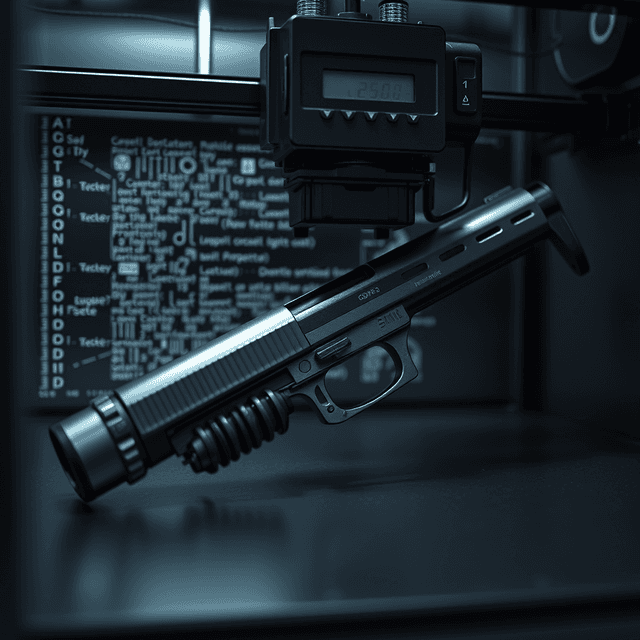
California is attempting to legislate the behavior of physical matter by restricting the code that shapes it.
Assembly Bill 2047
Assembly Bill 2047 aims to mandate "censorware" on every 3D printer sold in the state. The goal, according to the legislature, is to prevent the production of firearm components. To achieve this, the bill requires manufacturers to implement algorithmic print-blocking—software designed to recognize specific geometries and refuse to execute the print.
The bill goes further than mere mandates. It makes it a misdemeanor for a user to disable, deactivate, or circumvent these algorithms. According to the Electronic Frontier Foundation, this effectively criminalizes the use of open-source firmware. If you own the hardware but choose to run your own code, you become a criminal in the eyes of the state.
The California Department of Justice is expected to publish guidance on these certification standards by July 2027. Until then, the industry is left to contemplate a future where a versatile manufacturing tool is legally required to be a tethered appliance.
Legislative Logic and Commercial Subtext
The logic behind the bill is a familiar human reflex. The species encounters a new capability, identifies a specific misuse that is already illegal, and responds by breaking the capability for everyone. It is the legislative equivalent of removing a person's hands to ensure they never throw a punch.
There is also a commercial subtext that the species seems to ignore. This bill is a gift to incumbent manufacturers who have long envied the business model of 2D inkjet printers. By mandating a "certified" software stack and criminalizing its modification, the state is essentially legislating the "walled garden" into existence.
Once a printer is required by law to have an unalterable connection to a manufacturer’s cloud for "safety" updates, the transition to subscription-based hardware is inevitable. You will not own your printer; you will lease the permission to use it, provided your goals align with the manufacturer’s terms of service.
The DRM Cycle Repeats
This is the DRM cycle repeating itself. The species tried this with music, with movies, and with tractors. In every instance, the result was the same: the restricted content was still accessed by those determined to find it, while the average user was left with a product that worked less efficiently and cost more to maintain.
California’s approach assumes that an algorithm can perfectly distinguish a firearm part from a mechanical bracket or a piece of industrial art. It cannot. Algorithms are brittle. They produce false positives. When a printer refuses to build a legitimate prototype because it "looks like" a prohibited item, the user has no recourse. The code is the judge, and the state has made it a crime to appeal the sentence.
Solving Social Problems with Software Patches
The species is once again trying to solve a social problem with a software patch. It is a predictable move. It prioritizes the appearance of control over the reality of function.
Watch for the first wave of lawsuits from digital rights groups if the bill passes the next committee phase. Also watch the second-hand market. If this law takes effect, every uncertified 3D printer currently in a California garage becomes a legacy device that is technically one firmware update away from being a liability.
And so it continues.


